
September 10, 2025
Hardwood Floor Patterns: Herringbone, Chevron, and Other Layouts That Make a Statement
Hardwood flooring is one of the most versatile and timeless design choices a homeowner can make. While the species of wood and stain color often get most of the attention, the pattern in which your floors are installed can be just as impactful. Flooring patterns go far beyond straight planks—today’s homeowners are embracing bold layouts like herringbone, chevron, parquet, and mixed-width designs to add unique character to their homes.
Choosing the right floor pattern can completely transform a space. It can make a room feel larger, add visual interest, and even reflect a particular design style, from traditional elegance to modern sophistication. If you’re thinking about upgrading your floors or simply want to explore new ideas, this guide will walk you through the most popular hardwood floor patterns, their history, and the benefits of each.
Why Floor Patterns Matter
Flooring patterns do more than hold your planks in place—they influence how the eye perceives a room. For example:
- A diagonal layout can make a small room appear larger.
- Bold geometric patterns, like artwork under your feet, can create a focal point.
- Subtle plank size or direction changes can give a space flow and dimension.
In short, your floor pattern is a design tool. With hardwood being such a long-term investment, it’s worth exploring options beyond the standard straight lay.
Classic and Modern Hardwood Floor Patterns
1. Straight Lay (Traditional Plank Pattern)
The most common and budget-friendly option, straight lay, involves planks running parallel to each other, usually aligned with the longest wall in a room.
- Pros: Timeless, affordable, and works in any room size.
- Best For: Homeowners who want a clean, simple look highlighting the wood grain.
- Design Tip: Pair with bold rugs or furniture to add extra style.
2. Diagonal Pattern
Instead of running planks parallel to the walls, diagonal layouts angle the planks (usually at 45 degrees).
- Pros: Creates a sense of spaciousness and visual movement.
- Best For: Small rooms or areas where you want to add subtle drama.
- Design Tip: Works well in entryways or hallways, where diagonal lines naturally draw the eye.
3. Herringbone Pattern
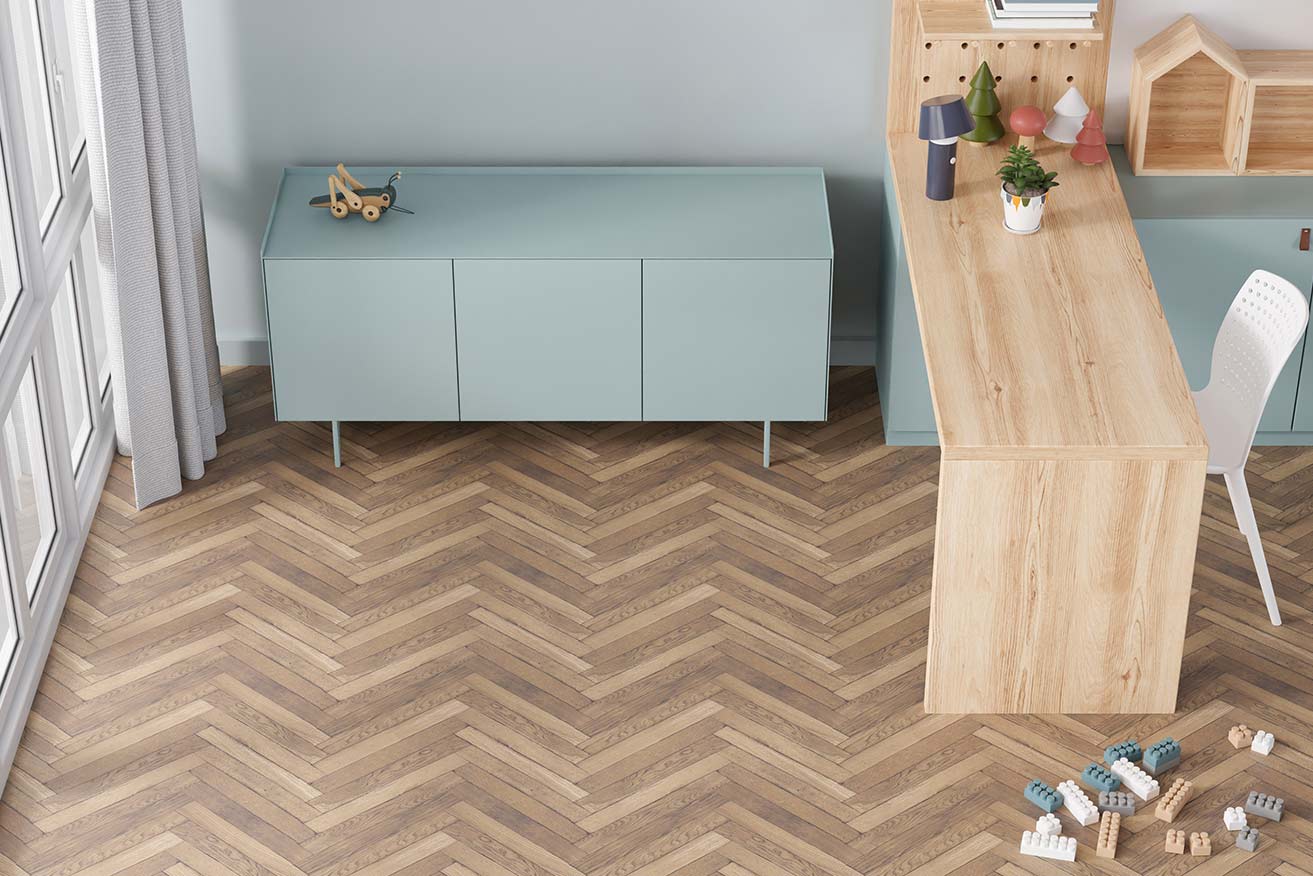
Herringbone is one of the most iconic hardwood patterns. Planks are laid in a zigzag, with each piece meeting at a right angle. The effect resembles the skeleton of a herring fish—hence the name.
- History: Originating in Roman roads and later adopted in European castles, herringbone has long been a symbol of sophistication.
- Pros: Adds elegance and visual interest without being overwhelming. Extremely durable since the interlocking pattern prevents shifting.
- Best For: Living rooms, dining rooms, or anywhere you want a high-end, timeless look.
- Design Tip: Works beautifully with both light and dark stains, especially when paired with neutral walls.
4. Chevron Pattern
Similar to herringbone but with a sharper twist, chevron uses planks cut at an angle to form a continuous “V” shape.
- Pros: Sleek, modern, and bold. Chevron creates a more pronounced statement than herringbone.
- Best For: Contemporary spaces, lofts, or accent areas like feature walls or foyers.
- Design Tip: The bold chevron pairs best with minimalist décor to let the pattern shine.
5. Parquet Pattern
Parquet flooring involves arranging small pieces of wood into repeating geometric designs, such as squares, diamonds, or intricate mosaics.
- History: Popular in 17th-century French palaces, parquet floors symbolized luxury and craftsmanship.
- Pros: Eye-catching and customizable—patterns can be as straightforward or as elaborate as you like.
- Best For: Formal spaces like dining rooms, ballrooms, or high-end offices.
- Design Tip: Pair with lighter furniture to avoid overwhelming the space.
6. Mixed-Width Planks
Instead of using planks of the same width, mixed-width designs combine wide and narrow planks for a rustic, natural feel.
- Pros: Adds texture and uniqueness without being overly formal. Creates a hand-crafted look.
- Best For: Farmhouse, cottage, or rustic-style homes.
- Design Tip: Wide planks work well in large, open spaces, while mixed widths add character in smaller rooms.
7. Basketweave and Brick Patterns
These less common designs use rectangular planks arranged to mimic woven baskets or bricks.
- Pros: Unique and artistic, often used as a statement in specific areas.
- Best For: Entryways, kitchens, or as a border in larger rooms.
- Design Tip: Try combining lighter and darker stains for added dimension.
Choosing the Right Pattern for Your Home
When deciding on a hardwood pattern, consider these key factors:
- Room Size: Patterns like herringbone and parquet can make small rooms feel busy, while diagonal or straight lay often help expand the space.
- Style of Home: Traditional homes often suit herringbone or parquet, while modern spaces shine with chevron or wide planks.
- Budget: Intricate patterns like parquet or chevron require more labor, increasing installation costs. Straight and diagonal are generally more affordable.
- Maintenance: Patterns don’t affect cleaning much, but darker stains or highly textured woods can make dust more noticeable.
The Impact of Stains on Patterns
Stain color can dramatically change how a pattern looks:
- Light stains (like natural oak or Scandinavian whites) make patterns feel airy and subtle.
- Dark stains (like espresso or walnut) add richness but emphasize the geometry of the pattern.
- Greys and cool tones modernize classic patterns like herringbone, making them feel contemporary.
Real-World Applications
- Entryways: Chevron or herringbone creates a bold first impression.
- Living Rooms: Straight or diagonal keeps the space open, while parquet adds elegance.
- Kitchens: Mixed-width planks offer a rustic, family-friendly vibe.
- Bedrooms: A straight lay with a light stain brings calm and warmth.
When to Bring in the Professionals
Installing intricate patterns like chevron or parquet is not a DIY-friendly job. These designs require precise cuts and expert craftsmanship to ensure clean lines and durability. Even straight lay floors benefit from professional installation, as experts account for subfloor prep, humidity levels, and wood acclimation.
Conclusion
Hardwood flooring is about more than just wood species or stain color—the pattern you choose is a design statement that shapes how your home feels. Whether you’re drawn to herringbone’s timeless elegance, chevron’s bold geometry, or the rustic charm of mixed-width planks, your floor pattern can transform an ordinary room into a showpiece.
By carefully considering your style, room size, and budget, you can select a hardwood layout that balances function with beauty. With the right choice and the skill of professional installation, your floors will become a lasting centerpiece in your home, blending durability with unforgettable design.