
May 26, 2026
Commercial LVP Flooring in Connecticut: A Business Guide
If you’re a Connecticut business owner looking at new floors, the conversation has changed significantly over the past several years. Luxury vinyl plank — LVP — has become the dominant commercial flooring choice across offices, restaurants, retail spaces, and healthcare facilities, and for good reason. It’s waterproof, durable, low-maintenance, and available in styles that look genuinely sharp. But commercial LVP is not the same product as what gets installed in a family’s living room, and making the wrong spec decision can mean a floor that looks tired within two years of heavy use.
This guide breaks down what Connecticut business owners need to understand about commercial LVP flooring — how it’s specified, where it performs best, what makes it especially practical in New England’s climate, and what to ask before any contractor starts work.
Why Commercial LVP Is Different From Residential LVP
The most important thing to understand about commercial LVP is the wear layer. The wear layer is the clear protective coating on the plank that shields the floor from foot traffic, scuffs, stains, and everyday wear. It’s measured in mils — one mil equals one-thousandth of an inch — and the number matters enormously in a commercial setting.
For residential use, a 12-mil wear layer is considered standard. In a commercial space, 12 mil is the bare minimum, and for most Connecticut businesses — restaurants, retail floors, medical offices, gyms — a 20-mil wear layer or higher is the appropriate spec. In commercial use, wear layers of 20 mil or above are preferred for high-traffic spaces such as offices, retail stores, and restaurants. For extremely high-traffic corridors or heavy-use environments, a 40-mil wear layer provides robust scratch and stain resistance.
Beyond the wear layer, commercial LVP also typically features a denser, more rigid core construction — often referred to as SPC (stone plastic composite) or WPC (wood plastic composite) — that holds up better under rolling chairs, heavy equipment, and the kind of concentrated foot traffic a busy Hartford County restaurant or West Hartford medical office sees daily. Residential LVP installed in a commercial setting will fail prematurely, void the manufacturer’s warranty, and cost more to replace than doing it right the first time.
Why Connecticut’s Climate Makes LVP the Smart Commercial Choice
Connecticut businesses face the same climate challenges as Connecticut homeowners — just at a larger scale. The state’s humidity swings from heavy, moisture-laden summers to bone-dry, heated winters, putting wood-based flooring under constant stress. For a commercial space that can’t afford to close for floor repairs or refinishing, that’s a significant liability.
LVP is fully waterproof and dimensionally stable, meaning it doesn’t expand or contract with humidity changes. For a Rocky Hill restaurant kitchen, a Glastonbury medical office, or a Middletown retail shop that runs through Connecticut’s full four seasons, that stability translates directly to less maintenance, fewer repairs, and a floor that keeps looking professional without ongoing intervention.
Commercial spaces also deal with tracked-in moisture from November through April — snow, slush, road salt, and mud — which can stress a hardwood or laminate floor considerably. LVP handles all of it without swelling, staining, or surface deterioration. For Connecticut businesses near high-traffic entrances or with open floor plans that flow between interior and exterior spaces, that resilience is hard to overstate.
Where Commercial LVP Performs Best in CT Business Spaces
Restaurants and food service: LVP is waterproof, easy to clean, and slip-resistant, making it ideal for kitchen-adjacent areas. The wood-look aesthetic works well in dining rooms without the maintenance demands of real hardwood. Commercial-grade LVP with a 20-mil or higher wear layer handles the constant foot traffic of service staff and diners without showing wear quickly.
Medical and dental offices: Healthcare environments need flooring that is easy to sanitize, resistant to moisture and chemicals, and visually professional. Commercial LVP meets all three criteria. Its seamless plank installation limits the grout lines and seams where bacteria can accumulate — a real advantage over tile in clinical settings.
Retail spaces: Connecticut retail floors take a beating from customer traffic, rolling carts, and seasonal tracked-in debris. Commercial LVPs’ wear layer handles concentrated traffic patterns — near checkout counters and along main aisles — that would show wear on residential-grade products within months.
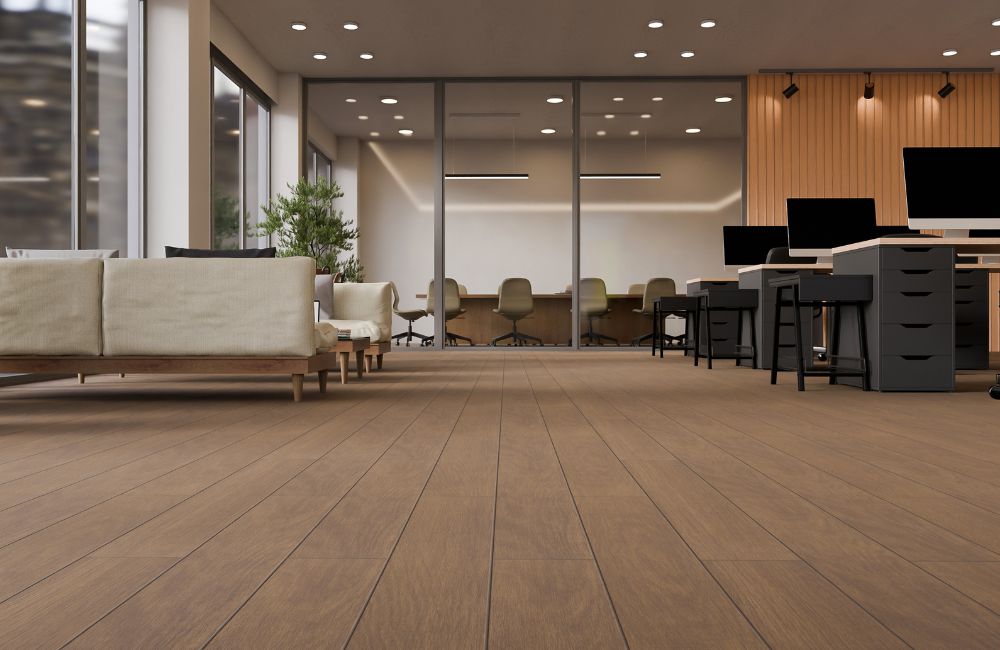
Office spaces: LVP holds up well under rolling office chairs, which can quickly damage softer flooring. Its sound-dampening properties — especially when paired with an underlayment — make open-plan offices more comfortable. It’s also far easier to maintain than carpet, which harbors allergens and requires periodic deep cleaning.
Gyms and fitness studios: For lighter-use fitness areas — yoga studios, physical therapy offices, boutique fitness spaces — commercial LVP provides a durable, easy-to-clean surface. For heavy weightlifting or high-impact zones, rubber flooring is typically the better call, but LVP works well in lobby and common areas of fitness facilities throughout Hartford County.
What to Look for When Specifying Commercial LVP in Connecticut
When evaluating commercial LVP products for a Connecticut business, these are the specs that matter most:
Wear layer thickness: For most commercial products, the ASTM spec for heavy commercial traffic is a 20-mil wear layer or higher. Light commercial applications — a small private office, a low-traffic reception area — can work with a 12-mil product, but for anything with consistent daily foot traffic, 20 mil should be the floor, not the ceiling.
Total plank thickness: For commercial spaces with heavy foot traffic, such as offices, restaurants, and retail stores, a 6–8mm total plank thickness offers greater durability and better soundproofing. Thinner planks telegraph subfloor imperfections and feel hollow underfoot — both problems that become more noticeable in a professional setting.
Installation method: For commercial applications, glue-down installation is often preferred over floating click-lock, particularly in high-traffic areas. In Connecticut’s older commercial buildings — where subfloors may be less than perfectly flat — a professional assessment of the subfloor before installation is essential to ensure glued floors don’t shift, don’t develop gaps under rolling equipment, and perform more consistently over the long term.
Commercial warranty: Residential LVP warranties do not cover commercial use. Any product installed in a business setting should carry an explicit commercial warranty. Most quality commercial LVP products from manufacturers like Shaw, COREtec, and Karndean offer warranties ranging from 10 to 25 years for commercial applications — but only when the product is properly specified and installed.
Finish and color: Darker colors tend to show more scratching than lighter colors. For high-traffic commercial areas in Connecticut — a restaurant entrance, a retail main aisle — mid-tone wood looks with natural variation in the pattern tend to hide everyday wear better than very dark or very light options.
The Bottom Line for Connecticut Business Owners
Commercial LVP is one of the most practical flooring investments a Connecticut business can make — but only when it’s specified and installed correctly. The difference between a residential 8-mil product and a commercial 20-mil product isn’t just a number on a spec sheet. It’s the difference between a floor that starts looking worn within a year and one that keeps performing for a decade or more under real business conditions.
Connecticut’s climate — with its humidity swings, salt-heavy winters, and demanding shoulder seasons — makes the case for LVP even stronger in commercial settings. It’s waterproof, stable, low-maintenance, and available in designs that look genuinely professional. For most Hartford County businesses, the flooring decision makes the most sense across every dimension: performance, cost over time, and appearance.
Frequently Asked Questions
Can I use regular residential LVP in my Connecticut business?
It’s not recommended. Residential LVP is not warranted for commercial use, and its thinner wear layer will deteriorate much more quickly under heavy business-level foot traffic. A residential product installed in a commercial setting will also void the manufacturer’s warranty, meaning any defects or premature wear won’t be covered. Always specify a product with a commercial warranty for business installations.
How long does commercial LVP last in a high-traffic Connecticut business?
Commercial 20-mil wear layers often last 15 years or more under normal business conditions. Higher-spec products at 28 mil and above can last considerably longer. Lifespan depends heavily on traffic levels, maintenance practices, and whether the product was correctly specified for the environment. A quality installation, with proper subfloor prep and a commercial-grade product, is the foundation for long-term performance.
Is commercial LVP appropriate for a Connecticut restaurant kitchen?
For dining areas and front-of-house spaces, absolutely. For the kitchen itself — particularly in areas subject to grease, heavy cleaning chemicals, and extreme temperature changes near cooking equipment — consult a flooring professional to determine whether commercial LVP or a harder surface like porcelain tile is the better fit. LVP is waterproof, but prolonged exposure to harsh cleaning agents or extreme heat can affect the finish over time in heavy-use kitchen environments.
What’s the best way to maintain commercial LVP flooring?
Commercial LVP is low-maintenance by design. Daily dry mopping or vacuuming to remove grit — which acts like sandpaper on the wear layer — is the most important routine step. Damp mopping with a pH-neutral cleaner handles deeper cleaning. Avoid steam mops, wax-based products, and abrasive cleaners, as they can degrade the finish. Entrance mats at all exterior doors significantly extend the floor’s lifespan by reducing tracked-in debris and moisture — particularly important in Connecticut’s salt-heavy winters.
Does commercial LVP require special subfloor preparation in older Connecticut buildings?
Often yes. Many commercial buildings in Hartford County — particularly older retail and office spaces — have concrete subfloors that may be uneven, cracked, or moisture-damaged. Commercial LVP requires a flat, dry, structurally sound subfloor for proper performance. A professional flooring contractor should assess the subfloor before installation and address any leveling or moisture mitigation needs. Skipping this step is one of the most common causes of premature floor failure in commercial installations.
Sources
Ellie CM — “LVP Wear Layer Guide for Contractors & Builders” (2025)
Mannington Commercial — “How to Choose the Right LVT Flooring for Commercial Use”
Floor Critics — “Choosing Vinyl Plank Flooring Thickness” (2025)
Flooring Rating — “Best Commercial Vinyl Plank Flooring for High-Traffic Environments”
Navame Flooring — “LVP Wear Layer Guide: 6, 12, 20 mil — What’s Right?” (2025)
—
Planning a commercial flooring project in Hartford County? Mr. Hardwood installs commercial-grade LVP throughout Connecticut and offers free estimates for business owners. Call 203-GOT-WOOD or visit mrhardwood.com to get started.