
November 16, 2026
How to Choose Hardwood Floor Stain Color: CT Room Guide
Picking a hardwood floor stain color is one of the decisions homeowners stress about most — and for good reason. The floor covers more square footage than any other surface in the room. It’s expensive to change. And it has to work with everything else: wall colors, cabinets, furniture, trim, and the light that comes through your windows at different times of day.
The good news is that stain selection doesn’t have to be guesswork. A logical process can help you narrow your options, and understanding a few fundamentals of how stain interacts with wood and light makes the whole thing much less overwhelming.
This guide walks through how to approach stain color selection room by room, with specific considerations for Connecticut homes.
Start With the Wood Species, Not the Color Chip
The biggest mistake homeowners make when choosing a stain is picking a color from a chip or photo without accounting for the wood species underneath.
Stain doesn’t sit on top of wood — it penetrates the grain. The color you end up with combines the stain pigment with the wood’s natural color and grain pattern. The same stain applied to red oak and white oak produces noticeably different results. On maple, it still looks different.
Red oak has warm, pinkish undertones and open grain. It takes warm stains well and absorbs color readily, but it resists cool tones — gray stains on red oak often turn muddy or purple.
White oak has neutral, slightly cool undertones and closed grain. It’s the best canvas for gray, whitewashed, and very dark stains. It gives you the widest range of color options.
Maple is very dense and doesn’t absorb stain evenly, which makes it blotchy without careful prep. Natural or very light finishes work best on maple.
Hickory has dramatic natural variation — light sapwood and dark heartwood in the same board. Heavy staining can muddy that contrast. Light to medium stains or natural finishes let the character come through.
Before you fall in love with a stain color, confirm it works on your specific species. Ask to see a sample applied to your actual wood, not a generic floor chip.
Understand How Light Changes Everything
A stain that looks perfect in the showroom can look completely different in your home — and light is the reason.
Natural light direction matters. North-facing rooms get cool, indirect light all day. Warm stains can help balance that coolness. South-facing rooms get bright, warm light that can make already-warm stains feel overwhelming. East-facing rooms get warm morning light and cool afternoons. West-facing rooms are the opposite.
Artificial light matters too. Incandescent and warm LED bulbs (2700K–3000K) add warmth to everything, making cool grays look more neutral and warm browns look richer. Cool daylight bulbs (5000K+) do the opposite — they can make a warm brown floor look orange and make gray floors look almost blue.
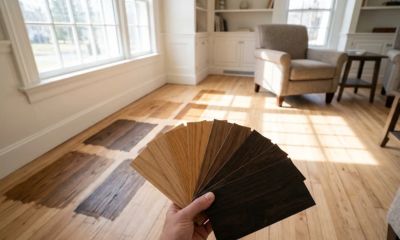
The only reliable way to evaluate a stain color is to look at a large sample in your actual space, in both daylight and your artificial lighting, at different times of day. A 6-inch floor chip held under a showroom light tells you almost nothing useful.
Room-by-Room Stain Considerations
Different rooms have different demands, and the right stain for your living room may not work for your kitchen or hallway.
Living Room and Dining Room
These are the showcase spaces — the rooms where the floor gets the most visual attention and where you’re most likely to have area rugs, upholstered furniture, and decorative elements that need to coordinate.
What works: Almost any stain can work here depending on your style. Medium browns like classic walnut tones are the most forgiving and coordinate with the widest range of furniture. Gray and whitewashed tones work well in contemporary spaces. Very dark stains (ebony, jacobean) make a dramatic statement but show dust and footprints more than lighter options.
What to watch: If you have a large area rug, include it in your stain evaluation. The floor visible around the rug’s edges needs to work with both the rug and the walls. Dark floors under a dark rug in a low-light room can feel heavy.
Kitchen
Kitchens are high-traffic, high-spill environments. Stain color affects how forgiving the floor is day to day.
What works: Medium tones hide dirt, dust, and minor scuffs better than very light or very dark options. If your cabinets are white or light gray, a medium warm brown creates contrast without competing. If your cabinets are dark, a lighter floor opens up the space.
What to watch: Very dark kitchen floors show every crumb, every water drip, and every footprint. They look stunning when clean and require constant maintenance to stay that way. Very light kitchen floors with kids or pets show wear faster and require more frequent cleaning.
Connecticut consideration: Many older Hartford County homes have kitchens that connect directly to mudrooms or back entries. If those spaces share the same floor, factor in the traffic from outdoor shoes and consider whether the stain color makes maintenance realistic.
Hallways and Entryways
These are the highest-traffic areas in any home and the first thing people see when they walk in.
What works: Medium tones are most practical — they hide wear patterns that develop in heavily trafficked paths. Wire-brushed or hand-scraped finishes help disguise minor scratches that accumulate over time.
What to watch: Very light stains in an entryway will show dirt from shoes and scuffs from bags and furniture being moved in and out. Very dark stains in a narrow hallway can make the space feel like a tunnel.
Bedrooms
Bedrooms typically see less traffic than main living areas, which opens up more options.
What works: Lighter, warmer tones work well in bedrooms, particularly in rooms that feel dark or small — they open the space up and make it feel airier. Gray tones work beautifully in contemporary master bedrooms paired with crisp white trim.
What to watch: If the bedroom connects to a hallway with existing floors, think about how the stain will read at the transition. A dramatic color shift between the hallway and bedroom can feel choppy, especially in an open layout.
Matching Stain to Your Home’s Overall Palette
For homes where the same hardwood runs throughout multiple rooms — which is most Connecticut homes — the stain needs to work everywhere, not just in one showcase space.
A few principles that hold up across room types:
Warm walls, warm floor. Warm-toned walls (creams, tans, warm grays, earthy greens) pair naturally with warm brown floor stains. Introducing a cool gray floor into a warm-toned home creates visual tension that’s hard to resolve.
Cool walls, flexible floor. Cool-toned walls (true whites, cool grays, blues, greens) work with both gray floors and warm medium brown floors. This combination gives you the most flexibility.
Match undertones, not just value. A floor and a wall color don’t need to match in darkness or lightness — they need to share undertones. A cool gray floor under warm beige walls will always look slightly off, even if both colors are beautiful on their own.
Don’t try to match your cabinets exactly. Floors and cabinets that are too close in color flatten the room. Some contrast — either lighter floors under darker cabinets or vice versa — gives the space visual depth.
How to Test Before You Commit
The right process for stain selection:
- Get large samples applied to your actual species. A flooring professional can apply several stain options to a sample board of your wood. Bigger is better — a 12×12 inch sample is the minimum; 2 feet square is better.
- Place samples in the actual room. Not leaning against the wall — flat on the floor where the wood will live.
- Evaluate at different times of day. Morning light, afternoon light, evening with your artificial lights on.
- Live with it for a few days. Don’t decide in one visit. Colors look different once you stop consciously studying them and start living with them.
- Consider the finish sheen. Matte and satin finishes make colors look slightly different than semi-gloss. The finish coat affects the final appearance almost as much as the stain itself.
Working With a Flooring Professional in Hartford County
Color selection is one area where in-person expertise makes a real difference. Photos and chips only go so far. A flooring professional who has applied dozens of stain colors across dozens of species in real Connecticut homes can quickly tell you which combinations work and which ones cause regret.
Mr. Hardwood works with homeowners throughout Rocky Hill and Hartford County to select and apply stain colors on-site. If you’re refinishing existing floors or installing new hardwood and want to get the color right the first time, we’re glad to bring samples to your home and work through the options with you.
Sources:
- How to Choose Hardwood Floor Stain — This Old House
- Wood Stain Color Guide — Bob Vila
- Hardwood Species and Stain Compatibility — NWFA
- How Lighting Affects Paint and Flooring Color — Sherwin-Williams
- Choosing Hardwood Floor Colors — Floor & Decor
- Hardwood Flooring Finish Types — National Wood Flooring Association