
July 28, 2026
LVT vs LVP Connecticut: Which Is Right for You?
If you’ve been shopping for new floors in Connecticut and found yourself staring at two options that sound almost identical — LVT and LVP — you’re not alone. Luxury vinyl tile and luxury vinyl plank are two of the most popular flooring choices in Hartford County homes right now, and the confusion between them is genuine. They’re made from the same core materials, cost roughly the same, and share many of the same performance advantages. But they are not the same product, and the differences between them matter when it comes to matching the right material to the right room in a Connecticut home.
This guide breaks down exactly what separates LVT from LVP, how each performs in Connecticut’s specific climate, and which one makes sense for each room in your home.
The Fundamental Difference: It’s About Shape and Style
The most important thing to understand about LVT vs. LVP is that the difference is primarily about format and aesthetic—not performance or construction. Both products are built from the same layered vinyl construction: a rigid or flexible core, a photographic layer that mimics natural materials, and a clear protective wear layer on top. What separates them is the shape of the product and what natural material each is designed to replicate.
LVP — Luxury Vinyl Plank comes in long, narrow planks that mimic the look of hardwood flooring. The format — typically 4 to 9 inches wide and 36 to 72 inches long — creates the visual effect of a wood floor with grain patterns, texture, and the warm tonal range of natural wood species like oak, hickory, or walnut. For Connecticut homeowners who want the warmth and character of hardwood without the maintenance demands or the sensitivity to humidity, LVP is the most common alternative.
LVT — Luxury Vinyl Tile comes in square or rectangular tile formats that mimic the look of stone, ceramic, marble, slate, or travertine. The tile format — typically 12×12, 12×24, or 18×18 inches — creates the visual effect of a tiled floor, with options that range from clean modern stone looks to weathered slate or veined marble. For Connecticut homeowners who want the look of tile or natural stone without the cold underfoot feel, the grout maintenance, or the installation complexity of porcelain, LVT is the practical alternative.
In short: if you want the look of wood, LVP. If you want the look of tile or stone, LVT.
Construction and Feel: How They Differ Underfoot
Beyond the visual difference, LVP and LVT have a few subtle construction differences that affect how they feel and perform in real-world use.
LVP is generally thicker than LVT — typically 6 to 12mm total thickness compared to LVT’s 2 to 5mm. That additional thickness gives LVP a warmer, slightly softer feel underfoot and better sound dampening, which matters in multi-level Connecticut homes where sound transmission between floors is a consideration. The thicker profile also makes LVP more forgiving over minor subfloor imperfections — an important factor in older Hartford County homes where perfectly flat subfloors aren’t guaranteed.
LVT, being thinner and denser, feels firmer underfoot — closer to the feel of actual tile or stone. In wet areas like bathrooms where LVT is commonly installed, that firmer feel is expected and appropriate. In a living room or bedroom, however, some homeowners find LVT’s feel less comfortable than LVP’s warmer, slightly cushioned surface.
Both products are fully waterproof when properly installed, making them significantly more moisture-resistant than hardwood, engineered hardwood, or laminate — a meaningful advantage in Connecticut’s humid summers and moisture-prone spaces year-round.
Installation: Click-Lock vs. Glue-Down
Installation method is one of the more practical differences between LVP and LVT in Connecticut homes.
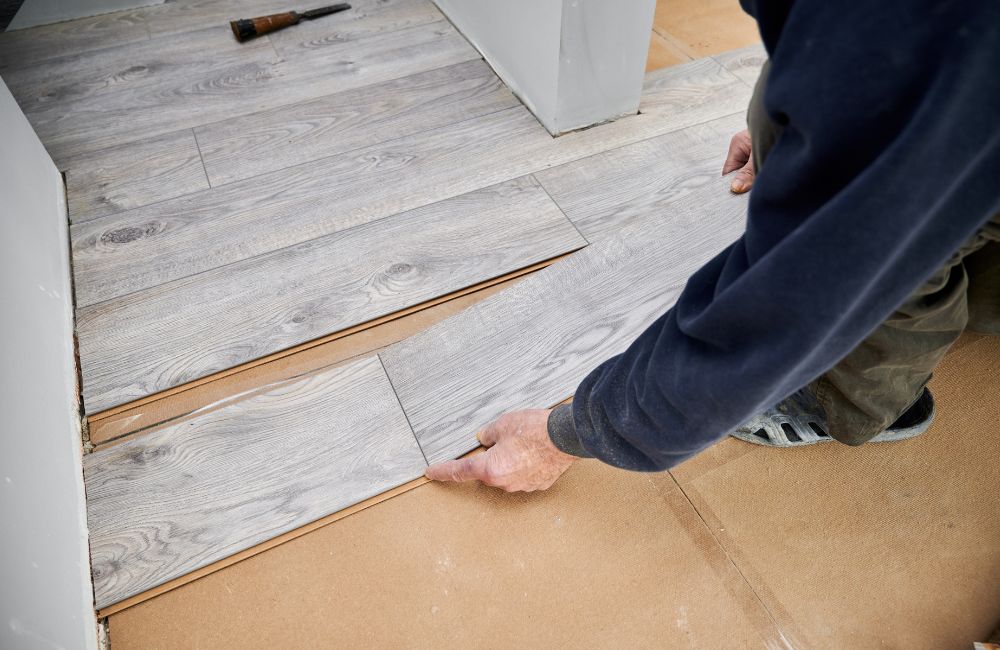
Most modern LVP uses a floating click-lock installation system — planks lock together without adhesive and float over the subfloor. This makes LVP faster to install, easier to replace individual damaged planks, and DIY-accessible for experienced homeowners. It also allows for slight movement with temperature and humidity changes, which is helpful in Connecticut’s climate.
LVT more commonly uses a glue-down installation method, where tiles are adhered directly to the subfloor with adhesive. Glue-down installation is more permanent, produces a floor that feels more solid underfoot, and is less prone to movement in high-traffic or high-moisture areas. It’s also more time-consuming to install and harder to replace if individual tiles are damaged later. Some LVT products are available in peel-and-stick or click-lock formats, but traditional glue-down remains the standard for commercial and high-end residential LVT applications.
For most Connecticut residential projects, click-lock LVP installation is faster, less disruptive, and more practical—particularly in occupied homes where minimizing downtime matters.
Where Each Performs Best in Connecticut Homes
Both LVT and LVP are waterproof and durable, but their format and feel make each more suited to specific rooms in a Connecticut home.
LVP works best in: Living rooms, dining rooms, bedrooms, home offices, hallways, and open-concept main floors. Anywhere you want the warmth and visual continuity of a wood-look floor, LVP delivers it at a fraction of the cost and maintenance of real hardwood. In Connecticut’s older colonials and capes where hardwood is expected throughout the main living level, LVP is the most natural-looking substitute. For a deeper look at how LVP performs across different rooms and Connecticut’s climate, see Mr. Hardwood’s LVP flooring service page.
LVT works best in: Bathrooms, kitchens, mudrooms, laundry rooms, and entryways — particularly where a tile aesthetic is desired or where the space already has a stone or ceramic design language. Connecticut mudrooms in particular benefit from LVT’s denser construction and tile format, which handles tracked-in salt, moisture, and winter debris without showing wear the way a plank floor can. LVT is also a strong choice for basement spaces where a cleaner, more contemporary look is desired over the wood aesthetic. For more on Mr. Hardwood’s LVT options, see the LVT service page.
Cost: Comparable, With Some Differences
LVP and LVT are priced similarly in most markets, both running approximately $2 to $10 per square foot for materials depending on quality, wear layer thickness, and brand. Installation costs vary by method—click-lock LVP installation typically runs $1.50 to $3 per square foot. In contrast, glue-down LVT installation can run slightly higher due to the additional labor and adhesive involved.
Cost differences become meaningful at the high end. Premium LVP products with thicker wear layers, more realistic wood grain textures, and wider plank formats command a premium. Premium LVT in large-format tile designs with realistic stone veining also carries a higher price point. For mid-range residential projects in Hartford County, both products are accessible options that fit similar budgets.
Connecticut Climate Considerations
Both LVT and LVP handle Connecticut’s humidity swings significantly better than hardwood or laminate. Neither product expands, contracts, or warps in response to the seasonal moisture changes that stress wood-based flooring throughout the state’s heating and cooling seasons. For Connecticut homeowners who have struggled with gapping hardwood in winter or moisture damage in basement and mudroom spaces, both products represent a meaningful upgrade in climate resilience.
One nuance worth noting for Connecticut’s older homes: LVP’s thicker profile and click-lock installation are more forgiving over the uneven subfloors common in pre-1970 construction. LVT’s glue-down installation requires a flatter, more thoroughly prepared subfloor to achieve a good result — and subfloor prep in older Connecticut homes can add time and cost to an LVT project that wouldn’t be required for a click-lock LVP installation.
The Bottom Line
LVT and LVP are both excellent flooring choices for Connecticut homes — the right one depends on the aesthetic you’re going for and the room you’re installing in. If you want the warmth and continuity of a wood-look floor throughout your main living spaces, LVP is the right call. If you want the clean, contemporary look of tile or stone in a bathroom, kitchen, or mudroom, LVT delivers it at a fraction of the cost and maintenance of real tile. Many Connecticut homeowners use both — LVP on the main living floors and LVT in moisture-prone utility spaces — and the combination works beautifully.
Frequently Asked Questions
Is LVT or LVP better for a Connecticut bathroom?
LVT is the stronger choice for most Connecticut bathrooms. Its tile format, denser construction, and glue-down installation make it better suited to wet environments than LVP’s floating plank format. LVT in a stone or marble look also tends to suit bathroom design aesthetics more naturally than a wood-look plank floor. Both are fully waterproof, but LVT’s format and installation method make it the more appropriate choice in a room designed around water exposure.
Can LVP and LVT be installed in the same home?
Absolutely — and it’s a common approach in Connecticut homes. LVP on the main living floors and LVT in bathrooms, mudrooms, or kitchens creates a practical and visually intentional combination. The key is ensuring the transition between the two products is handled cleanly — either through a threshold strip at doorways or by designing the layout so the change in material falls at a natural visual break point like a doorframe.
Which is more durable — LVT or LVP?
Durability in both products is primarily determined by wear layer thickness rather than whether the product is a tile or plank format. A 20-mil wear-layer LVT and a 20-mil wear-layer LVP will perform comparably in most residential applications. LVT’s denser, glue-down construction can handle heavy appliances and concentrated weight slightly better, while LVP’s thicker overall profile handles rolling furniture and impact better. For most Connecticut residential uses, both products in a quality wear layer spec will perform reliably for 15 to 25 years.
Is LVP warmer underfoot than LVT?
Yes, noticeably. LVP’s thicker profile and the WPC or SPC core construction create a warmer, slightly softer feel underfoot compared to LVT’s thinner, denser tile format. In Connecticut winters, that difference is perceptible — particularly in rooms where people spend a lot of time standing or walking barefoot. For living rooms, bedrooms, and home offices where comfort underfoot matters, LVP’s warmer feel is a genuine advantage over LVT.
Does LVT require grout like real tile?
Some LVT products can be grouted to enhance the tile illusion further, but most residential LVT installations do not use grout. The seams between LVT tiles are tight enough that the floor reads as tiled without grout lines — which is actually an advantage over real ceramic or porcelain tile, since grout lines require ongoing cleaning and maintenance that LVT eliminates entirely. If a grouted look is important to the design, some LVT products are specifically designed for grout application, but it’s optional rather than required.
Sources
Angi — “LVT Flooring vs LVP Flooring: Pros, Cons, and Costs” (2026)
Flooring Stores — “Comparing LVT vs LVP Flooring — They Are Not the Same” (2026)
LX Hausys — “LVP vs. LVT: Understanding the Pros and Cons”
Basic Components — “LVT vs. LVP Flooring: What’s the Difference and Which One is Right for You?”
ONSUN — “LVT vs LVP Flooring: Complete 2026 Comparison Guide”
Flooring America — “LVT vs. LVP Flooring: What’s the Difference?” (2026)
—
Not sure whether LVT or LVP is the right fit for your Connecticut home? Mr. Hardwood installs both throughout Hartford County and offers free estimates. Call 203-GOT-WOOD or visit mrhardwood.com.